This year, I’ve decided to set boundaries! No, not with people who constantly demand more of my time. I’m talking about my inbox and subscriptions to scientific newsletters and educational YouTube channels!
Over two decades ago, as a research student, I was determined to gain as much knowledge as I could. I devoured journals and articles related to my field (and sometimes beyond it) and was very proud of my free subscription to the Table of Contents of the hallowed Nature Drug Discovery Reviews and New England Journal of Medicine, which provided weekly updates on breakthroughs in drug discovery and medicine, respectively. But old habits die hard. In today’s world of digital technologies and platforms, I find myself drowning in information overload, served to my inbox every other day in delectable formats, tempting me each morning with more and more information. Bioprotocol (✓ check), Drug Discovery (✓ check), The Scientist (✓ check), Faculty Lounge Harvard (✓ check), the aforementioned Table of Contents of prominent journals (✓ check), and more, the list is rather long! Whether student or teacher, this is a modern-day phenomenon that can cause even good intentions to backfire.
Trivia: Did you know that the term information overload was coined as far back as the 1970s by the famous futurist Alvin Toffler, predicting just this?
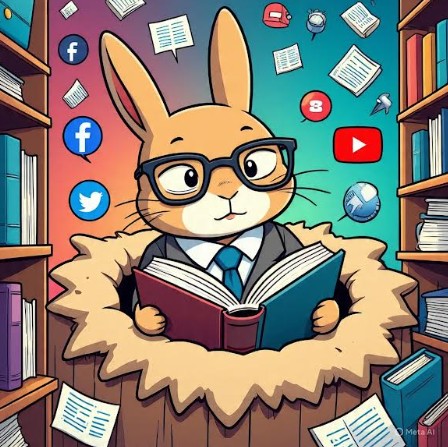
Today, we have ready access to information in a mind-boggling range of formats. If you like to read: newsletters and blogs; if you like to listen: podcasts and audiobooks; if you like to visualise your learning: videos, shorts, and animated mechanisms of action, and God forbid you like all three! When not practised in mindful moderation, this can lead to decision fatigue, stress, and anxiety, or, to take a morbid dig at the famous song from the movie Pocahontas, “you’ll learn things you never knew you never knew.”
So, how do you strike a balance while learning, so that you stay on track? These are a few points that I googled, read, and viewed that seemed to make sense:
- Set 2–3 well-thought-out goals for your learning or continuing education efforts
- Filter and prioritise actively manage and limit subscriptions to what truly matters to your learning goals
- Regularly clean out your email. If using Gmail, move all subscriptions and newsletters to the Social/Promotions tab
- If trying to learn a specific topic or skill, create a framework of questions you need to be able to answer at the end (learning outcomes), so that you have more structured learning
- Be mindful of the time spent on social media platforms, even LinkedIn or educational sites
- Set a time limit for such activities and a screen reminder for when you exceed it
So, while I have allowed myself the Faculty Lounge of Harvard Business School, among the other more scientific ones, the rest have been culled from regular reading for now.
Happy e-decluttering to you!

Dr. Tina Saldanha
Department of Pharmacology, AISSMSCOP